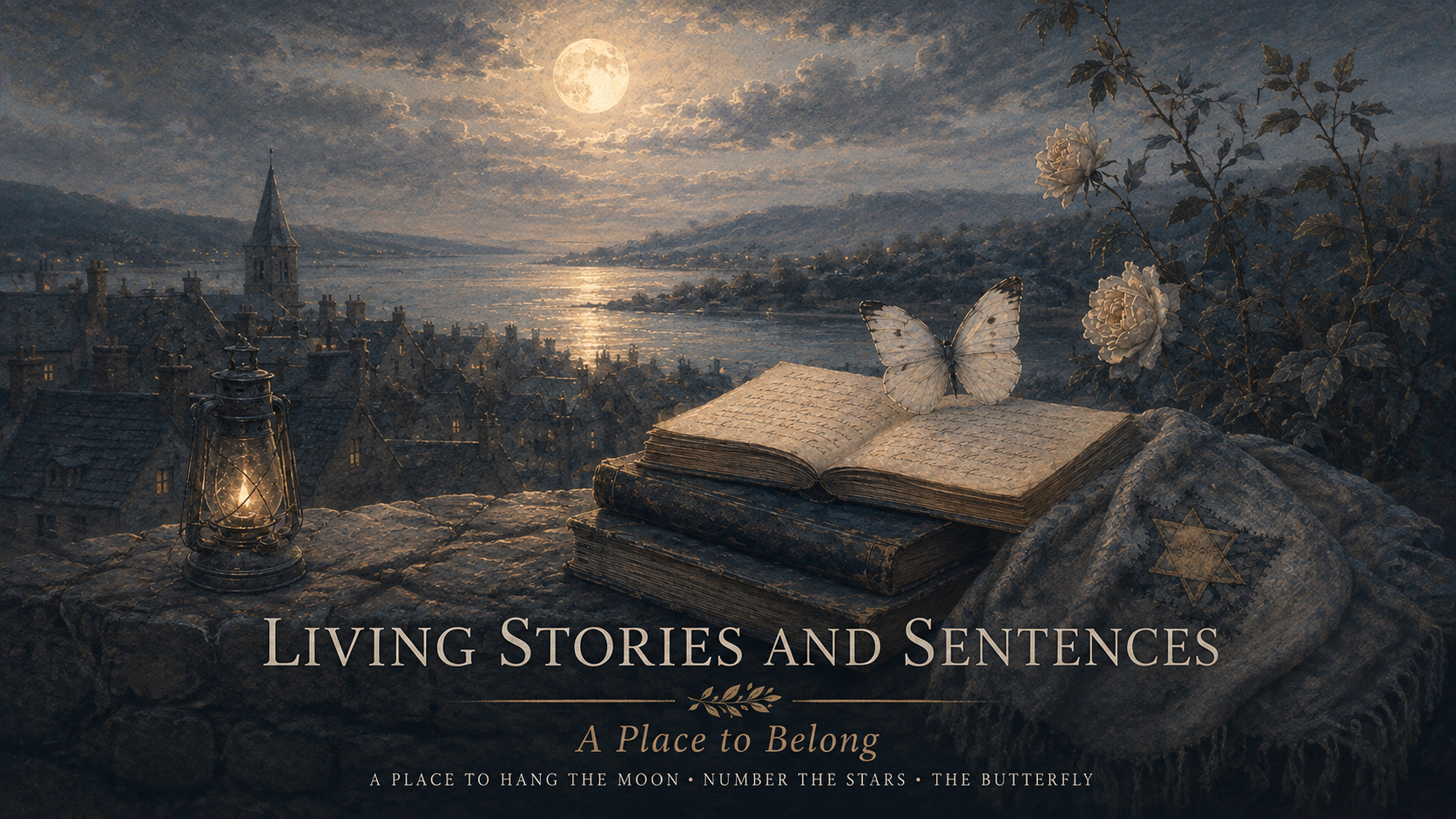
A language and literature year for middle schoolers — self-paced, one calm week at a time. We copy beautiful sentences, read living books, tell them back out loud, and write in our own true words. Two terms, one wartime world, and a single question underneath it all: what makes a place to belong?
It’s built as a whole, the way a year is. Here is the shape of it.
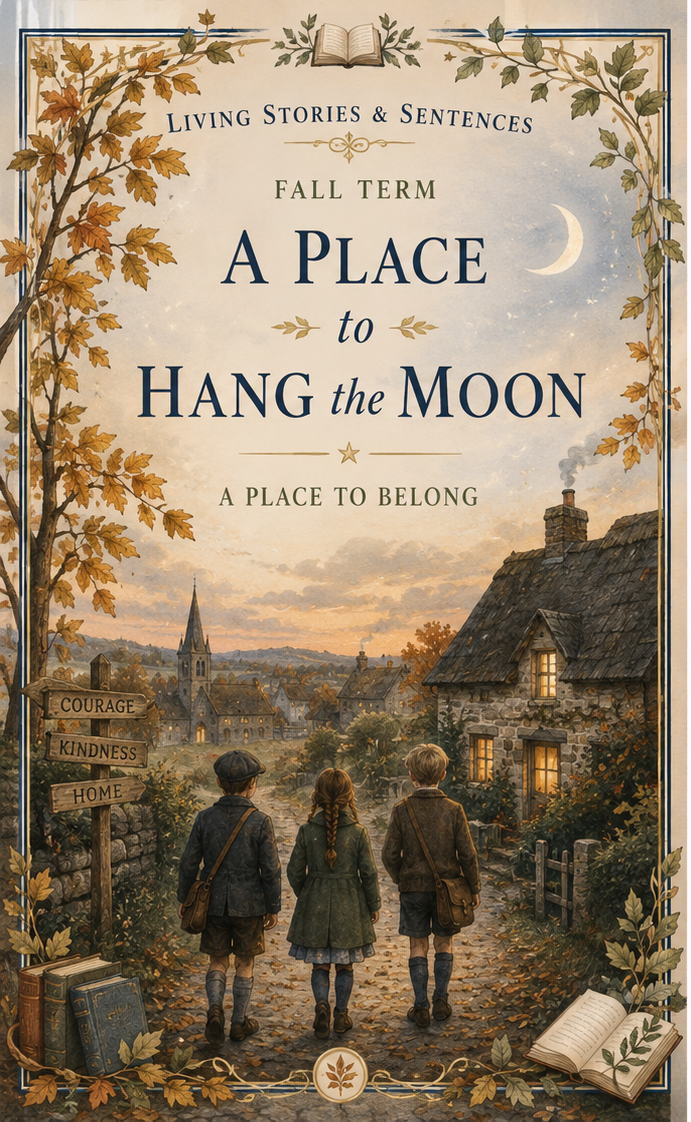
We warm up on a fable, a poem and a picture book that opens the WWII world quietly — then follow three orphaned siblings, evacuated to the English countryside, searching for a family. Along the way: Benjamin Britten, two days outdoors, a narration every week, and the habit of noticing the specific detail.
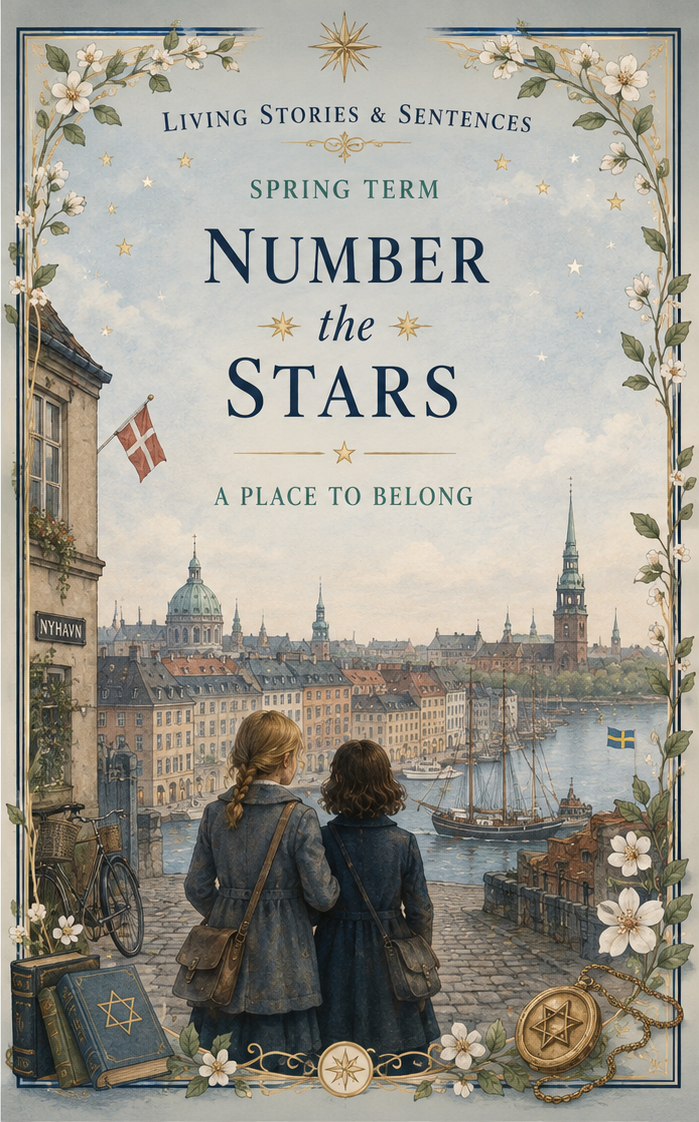
In spring we cross the water to occupied Denmark, where Annemarie’s family shelters her best friend from the soldiers on the corner. The same war, a new kind of courage — and the year’s two stories begin to speak to each other. The year closes with a project week and a celebration.
We read a single living book each term — slowly, narrating it, returning to it, living inside it — because depth, not coverage, is what forms a reader and a writer. One book truly known does more than a dozen skimmed.
And if you have an avid reader at home who devours everything? Wonderful. Our Reading Shelf holds a whole term’s worth of books that sit close to ours — never assigned, never graded — there to feed that appetite.
A narration every week is a rehearsal. By spring, your child isn’t dreading the blank page — they’re writing real compositions, because they always have something to tell.
Two short days a week, about twenty minutes each, with reading alongside.
Day One copywork, noticing & language study ·
Day Two read, tell it back & dictation
then the page that comes to me
The Lion and the Mouse
A Place to Hang the Moon · Ch. 3–5
Everything else — every week, the lessons, the answer keys and the Beauty Corner — opens with your class code.
Each week opens to its own page — copywork, the reading, the narration prompt, any music or art to sit with, and the Lantern if your child gets stuck.
- The complete weekly curriculum — handouts, readings, and online lessons
- Your child’s work read and graded, with my written feedback
- Our live Gatherings — book clubs every few weeks
- A one-to-one writing conference each term
- Full access to the course materials and the Lantern
So I can welcome your child well — this comes straight to me, and no one else.
As soon as you send the form, a welcome email with your class code lands in your inbox — with the three steps to open the course. Create your account, enter the code below, and the whole year unlocks.
Enter your class code
Type the code from your teacher to open the course.