
Second Sight
This is where the week opens outward — toward other thinkers, other art, and the help you need to do your best work.
Choose your path: reread, or watch
Path one — reread the novel. Faster this time; you know what's coming now, so watch for what Steinbeck was showing you all along. If a full reread is too much this week, go slowly through one passage instead: the opening of Chapter 1 (the pool and the path), the close of Chapter 6 (back at the same pool, the dream told one last time), or Crooks and Lennie in Chapter 4. Honors: choose two.
Path two — watch the film. Gary Sinise's Of Mice and Men (1992), with John Malkovich as Lennie, is one director's own second reading of the book, held up beside yours. Watch what he keeps, what he cuts, and what the camera notices that the page could only suggest. A note for families: it includes period-accurate language (racial slurs around Crooks) and the violence of the ending — watch together, or talk through what to expect first.
Whichever path you take, the work is the same: tell what you saw this time that you couldn't see the first — a pattern, an echo, a choice. And wherever the handout says “reread,” film-path students may hear “rewatch” — every question works for both.
Appalachian Spring — Aaron Copland
1944. Wide, plain, and American — built around the old Shaker tune "Simple Gifts." The sound of open land and the simple life George and Lennie keep dreaming of. Listen once through while you do nothing else.
Listen on SpotifySpring in Town
A whole town at its spring work — a man spading his garden, a quilt on the line, a child reaching into the blossom. The settled, rooted life George and Lennie only ever dreamed of. Hold it beside the little place they never got.
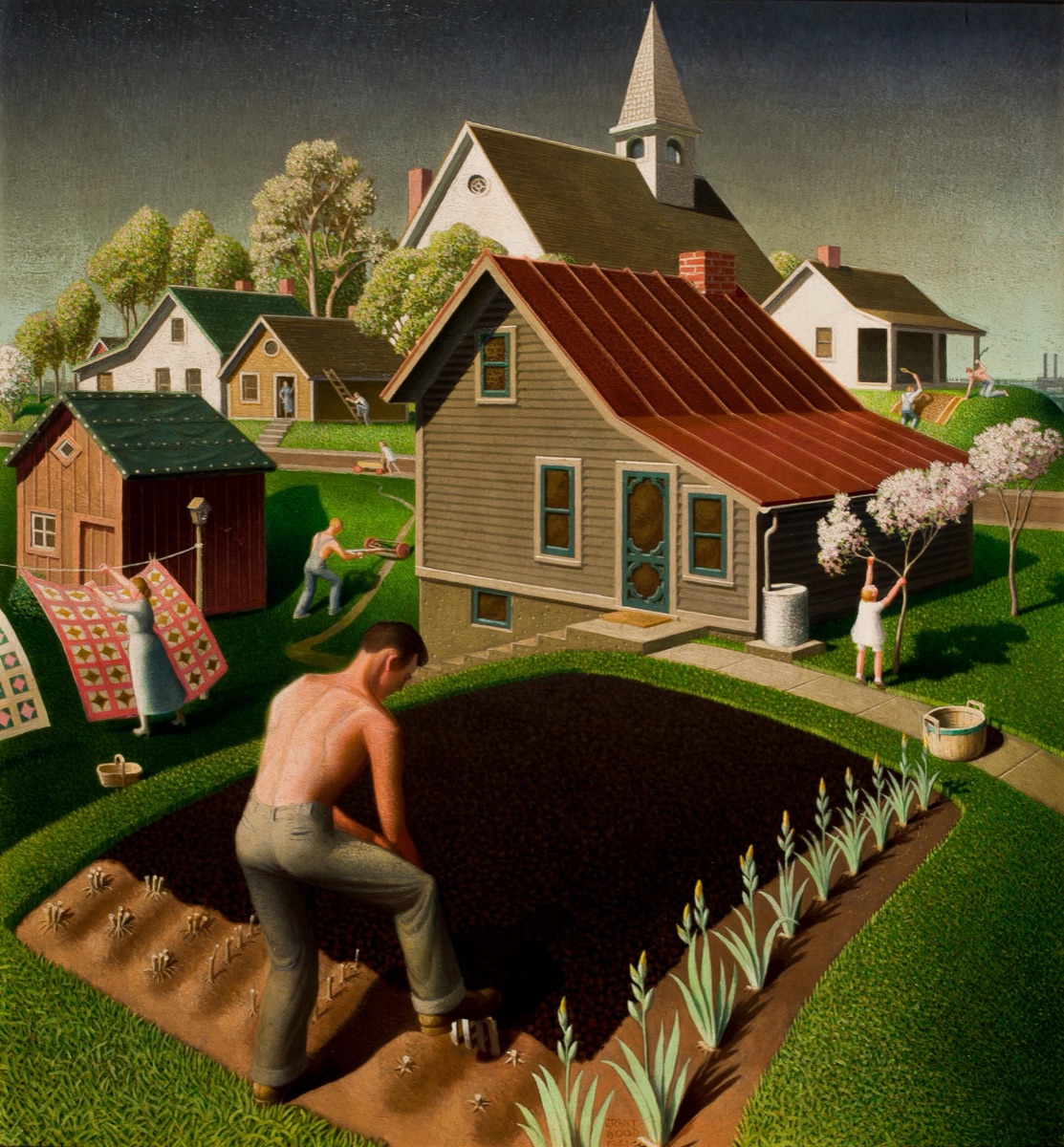
Look at it for a few unhurried minutes. Then look away and either tell someone everything you saw, or sketch it from memory.
Charlotte Mason called this Picture Study. She believed the telling — not the looking — is what makes a great work your own: attention is the discipline, and what we can call back to mind, we keep.

Following the Thread
This week, distill your character into a haiku — three lines, seventeen syllables (5–7–5), one true thing. Write three or four drafts and keep the one that says something real.
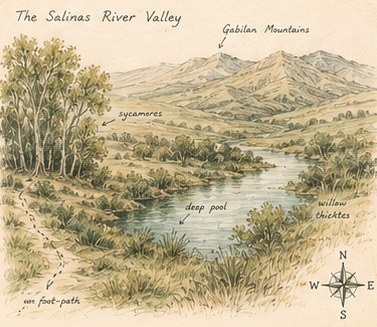
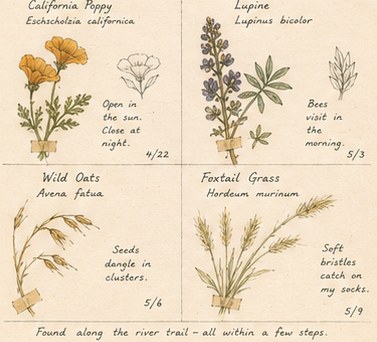
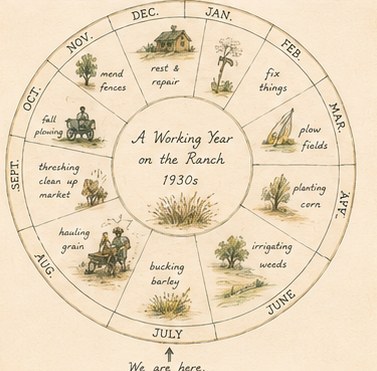
Next week you'll finish your Relation Study and present it at our final class. Take honest stock now: is your map, pressed-plant page, or working-year calendar nearly whole? Give it real time this week — and open the capstone page to see exactly what a finished study looks like.
Sartre and the People of the Ranch
Now that you've finished the book, sit with Sartre's question beside each character: what kind of person were they becoming through the choices they made? Honors students continue into Sartre's own words.
Open the Lens ReadingCompare your narration
After you've written your own narration on paper, hold it beside this one. Nothing to submit — this is for your own noticing.
Reading the pool scene again, after finishing the book, is like walking into a room where you already know what's buried under the floor. Everything George says in Chapter 1 comes true, only crooked — “hide in the brush till I come for you” was meant to be safety, and it becomes the place where everything ends. The heron and the water snake are already there on the first page: something quiet gets eaten in this exact spot before any person arrives. Lennie asks for the dream story “again” the very first time we hear it, so even the dream shows up already worn smooth from use. And Crooks's room reads differently the second time — his cruelty isn't meanness, it's him showing Lennie what his own nights feel like. The book didn't change; I did. That's the strange gift of reading it twice.
What makes it strong: This is what a second-sight narration should do — not retell the plot, but tell what the second visit uncovered. A film-path narration works exactly the same way: what did the camera show you that the page could only suggest? Every claim is anchored to something on the page: the heron, the word “again,” the brush.
See the strong & weak pair on Week OneTake a clear photo or scan of each finished section, then submit them to this week's assignment in Google Classroom.