
Endings
This is where the week opens outward — toward other thinkers, other art, and the help you need to do your best work.
Gas
A man alone at a pump, the road stretching away, the last of the daylight. Hold it beside George.
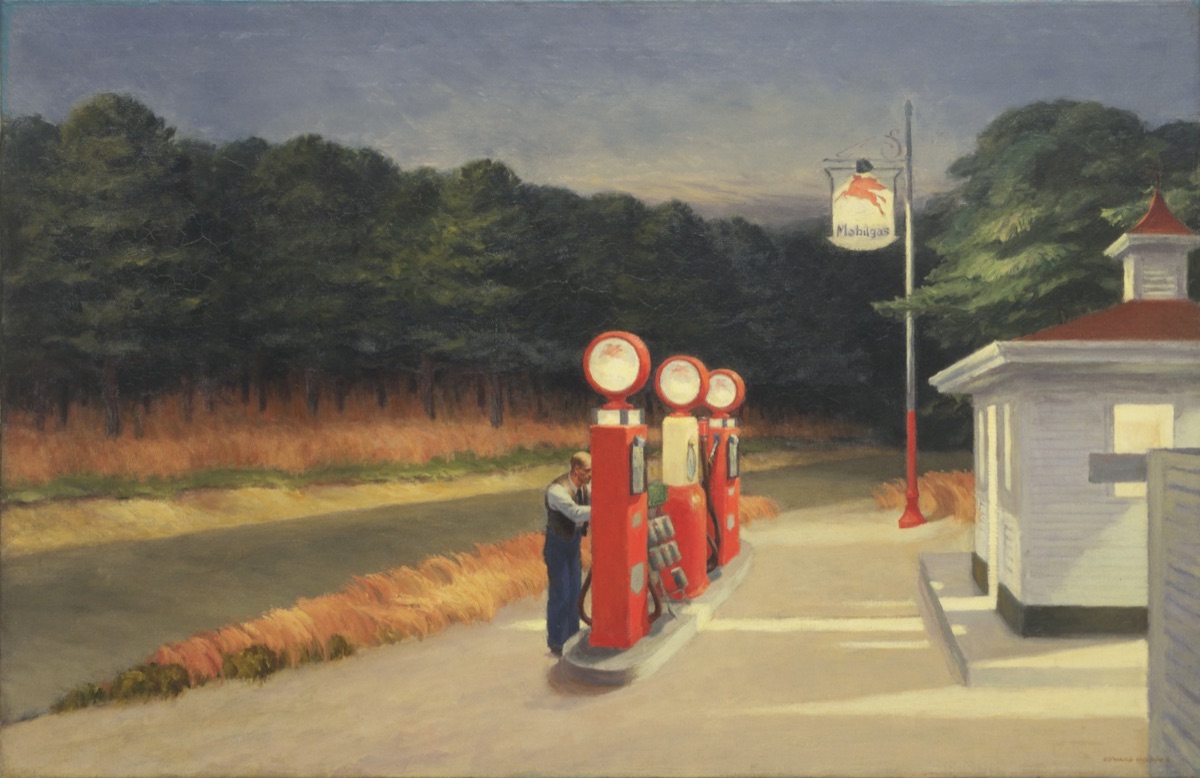
Look at it for a few unhurried minutes. Then look away and either tell someone everything you saw, or sketch it from memory.
Charlotte Mason called this Picture Study. She believed the telling — not the looking — is what makes a great work your own: attention is the discipline, and what we can call back to mind, we keep.

Following the Thread
This week, rewrite one short moment from Chapter 6 from inside your character's head — what they see, hear, think, and hold back. If your character isn't in the scene, write where they are at that exact moment. Stay faithful to who they have been all summer.
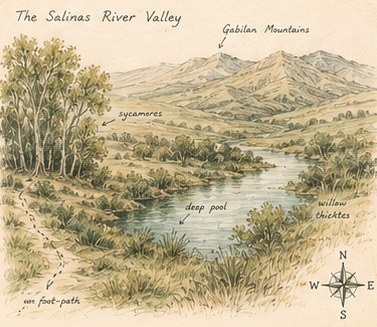
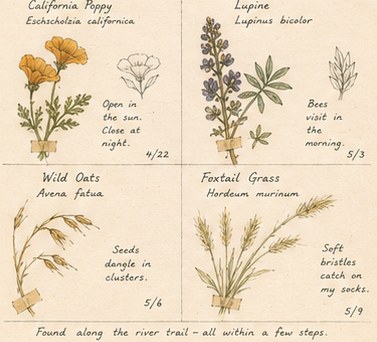
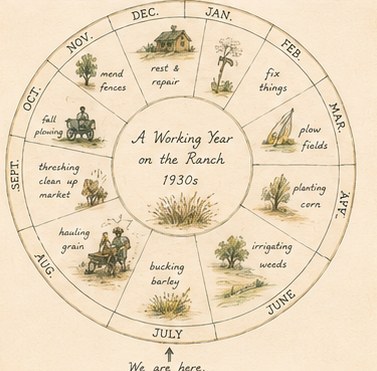
The novel is finished — from here on, the Capstone is the heart of your work. Your Relation Study (the map, the pressed-plant page, or the working-year calendar you chose in Week One) should be well underway. You'll bring it to camera at our final class, so open the capstone page and make sure yours matches what's expected.
Sartre and the Choices We Make
Meet Jean-Paul Sartre, who said we are not born with a fixed nature — we become who we are through the choices we make. Honors students continue into Sartre's own words.
Open the Lens ReadingCompare your narration
After you've written your own narration on paper, hold it beside this one. Nothing to submit — this is for your own noticing.
It begins with the puppy dead in the hay, and Lennie already knowing he's done a thing he can't take back. Curley's wife finds him there, and for the first time in the book somebody actually listens to her — she tells about the pictures, and the man who said she was a natural. She lets Lennie touch her hair, and the same hands that broke the puppy hold on when she screams. When the men find her, Candy's first grief is for the farm, because it dies in that barn too. Lennie remembers the one thing George ever made him memorize and goes to the brush beside the pool. George finds him there and tells the rabbit story one last time, making Lennie look out across the river while he raises Carlson's gun. The last word goes to Carlson, who can't understand why anybody would be sad.
What makes it strong: Notice what it refuses to skip: the puppy before the woman, Candy grieving the farm, and the ending given plainly, without drama added on top. Steinbeck's restraint is the model — the narration trusts the events to be enough.
See the strong & weak pair on Week OneTake a clear photo or scan of each finished section, then submit them to this week's assignment in Google Classroom.